Dubai, UAE
The overture to Gioachino Rossini’s opera ‘La gazza ladra’ has become one of the composer’s most famous inventions. Among others, Stanley Kubrick used the music in ‘Clockwork Orange’ to create an intriguing contrast to the violence he depicts in his dystopian crime film. According to the Italian author Lodovico Settimo Silvestri, the overture itself was written on the very same day of the opera’s première, under the threat of violence: in order to save the performance, the director locked Rossini in the attic of La Scala together with four technicians, who threw page after page through the window so that the copyists could duplicate the fresh score. In the eventuality of not delivering the music in time, Rossini was threatened with being thrown out of the window. If this rather dreadful story is true, it left no trace in the joyful and absolutely delightful composition.
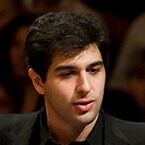
Johannes Brahms, a celebrated piano virtuoso of his time, highly appreciated the concertos of Wolfgang Amadeus Mozart, and proposed a cadenza on his own for Mozart’s somewhat sombre Piano Concerto No. 20. Mozart’s Piano Concerto No. 21, however, is very different: the brilliant orchestration and cheerful motifs make it one of the most beloved of the composer’s concertos. The fact that Swedish director Bo Widerberg used the second movement of the concerto — the Andante — in his film ‘Elvira Madigan’ is the reason why some refer to the concerto by this name. However, nothing could be more anachronistic, as the historic person who inspired the film lived long after Mozart had died. Turkish star pianist Fazıl Say, a renowned interpreter of Wolfgang Amadeus Mozart’s music, is the soloist in this concerto.
Brought into opposition to Richard Wagner and Franz Liszt by the fervent followers of the New German School, Johannes Brahms did not take part in the musical outburst of the Late Romantics, instead remaining true to the principles of Classicism. Brahms wrote his fourth and last symphony during his summer vacancy in the Austrian city of Mürzzuschlag. Apparently, he had been sceptical about the score for quite a while. In a letter, he expressed concern that the music might taste like the climate of Mürzzuschlag — where the cherries do not sweeten, and, indeed, some have described its tone as bitter and resigned. The beauty and spiritual depth in the Andante moderato seems to be inspired by music from the past, turning it into a longing romance.
Grammy nominated conductor, cellist and conductor Dmitry Yablonksy was born in Moscow into a musical family. He began playing the cello when he was 5 years old and was accepted to the Central Music School for gifted children. At the age of 9 he gave his orchestral debut playing Haydn’s cello concerto. Since then, his career had taken him to the most important stages in the world, such as the Carnegie Hall, La Scala, Moscow Great Hall, St. Petersburg Philharmonic Hall, Taiwan National Hall, Theatre Champs Elysees, Tokyo Opera City Hall among others. He has collaborated with many world renown artists as Monserrat Caballe, Roberto Alagna, Olga Borodina and many more. Dmitry started to conduct at age 26 and has conducted more then 50 orchestras all over the world including The Royal Philharmonic Orchestra with whom he made 4 cd’s.Dmitry Yablonsky has studied cello with Isaak Buravsky, Lorne Monroe, David Soyer, Aldo Parisot and Zara Nelsova. He also took master classes with Mstislav Rostropovich, Janos Starker, Andre Navarra, Maurice Gendron, , Misha Schneider among others. His conducting teachers have been Otto Werner Muller, Yuri Simonov and Gennady Rozhdestvensky. He has participated in many festivals all over the world including Marlboro Festival. He has recorded more then 90 CD’s as cellist and conductor to great critical acclaim. He is an Artistic Director of Gabala Music Festival, Puigcerda Music Festival and Wandering Music Stars Festival. Dmitry Yablonsky is Music Director of Kiev Virtuosi Symphony Orchestra. Since fall 2016, he is teaching cello and chamber music at the Buchmann-Mehta School of Music at Tel Aviv University and has been recently named Head of International Relations of the same University.Dmitry plays two cellos: a Joseph Filius Andrea Guarneri and a Matteo Goffriller.
With his extraordinary pianistic talents, Fazıl Say has been touching audiences and critics alike for more than twenty-five years, in a way, that has become rare in the increasingly materialistic and elaborately organised classical music world. Concerts with this artist are something different. They are more direct, more open, more exciting; in short, they go straight to the heart.
Since the beginning of his career he has played with all of the renowned American and European orchestras and numerous leading conductors, building up a multifaceted repertoire ranging from Bach, through the Viennese Classics (Haydn, Mozart and Beethoven) and the Romantics, right up to contemporary music, including his own piano compositions.
Guest appearances have taken Fazıl Say to countless countries on all five continents; the French newspaper “Le Figaro” called him ‘a genius’. He also performs chamber music regularly: since many years he has been part of a fantastic duo with violinist Patricia Kopatchinskaja. Other notable collaborators include Maxim Vengerov, the Minetti Quartet, Nicolas Altstaedt and Marianne Crebassa.
As a composer, Say has been commissioned to write music for, among others, the Salzburger Festspiele, the WDR and the Schleswig-Holstein Musik Festival, the Festspiele Mecklenburg-Vorpommern, the Konzerthaus Wien, the Dresdner Philharmonie, the Louis Vuitton Foundation, the Orpheus Chamber Orchestra and the BBC. His oeuvre includes four symphonies, two oratorios, various solo concertos and numerous works for piano and chamber music.
Highlights of the 2020-21 season include concerts with the Münchner Philharmoniker under Thomas Hengelbrock in Munich and Baden-Baden, the Tonhalle-Orchester Zürich under Paavo Järvi in Zurich and Hamburg, the Israel Philharmonic Orchestra under Iván Fischer, the Orpheus Chamber Orchestra and the Classic Open Air on the Gendarmenmarkt with the Konzerthausorchester Berlin and Christoph Eschenbach.
In recitals Fazıl Say can be heard in Japan and European cities such as Milan, Paris, Budapest, Moscow and Munich; in the first half of the season he dedicates his programmes mainly to Beethoven’s sonatas, in 2021 he takes Bach's Goldberg Variations and Schubert's C minor Sonata D 958 with him on tour.
Fazıl Say also regularly performs his own works in concert, including his piano concerto "Silk Road" with the Orchestre de Chambre de Lausanne, the Georgian Chamber Orchestra and the Irish Chamber Orchestra; "The Moving Mansion" with the Orpheus Chamber Orchestra, the Würth Philharmoniker and the Amsterdam Sinfonietta; his song cycle "İlk Şarkılar" with mezzo-soprano Serenad Bağcan in Hamburg, Zurich and İstanbul, and his İstanbul Symphony with the Orchester der Komischen Oper Berlin.
Fazıl Say has produced an extensive discography of over 40 CDs. His recordings for Teldec Classics, naïve and Warner have received numerous awards, including four ECHO KLASSIK and a Gramophone Classical Music Award. Since 2016 Fazıl Say has been an exclusive artist with Warner Classics, where his last recording of all Beethoven’s piano sonatas was released in January 2020.
The Jerusalem Symphony Orchestra, IBA was established in 1936 as a small studio ensemble, which grew into the Palestine Broadcasting Service Orchestra. With the foundation of the State of Israel the orchestra became the national radio orchestra, known as the Kol Israel Orchestra. In the 1970s, the orchestra was expanded and became the Jerusalem Symphony Orchestra, Israel Broadcasting Authority. The orchestra was the first to perform in Israel the works of Sofia Gubaidolina, Henri Dutilleux, Alfred Schnittke and others. Through the years some of the greatest musicians have performed with the orchestra, among them Arthur Rubinstein, Igor Markevitch, Otto Klemperer, Henryk Szeryng, Isaac Stern, Radu Lupu and Yefim Bronfman. One of the most notable premières performed by the orchestra was The Seven Gates of Jerusalem by the Polish composer Krzysztof Penderecki, conducted by Lorin Maazel, which was composed for the finale of the Jerusalem 3000 celebrations. This was a joint venture with the Bavarian Radio Orchestra. The orchestra often tours in Europe and the United States, and has played in some of the most prestigious venues. Recently JSO had successful tours to USA, where concerts took place from Florida to Massachusetts and for the first time a tour in Japan, both tours with Dmitry Yablonsky as conductor and soloist.