THE Piano Master’s Friendship and love
Slovak Philharmonic
Orchestra
Orchestra


Dubai, UAE
When, in 1859, Johannes Brahms, a gifted and admired pianist, premièred his Concerto for Piano and Orchestra No. 1 under the baton of Joseph Joachim, the response was very reserved. The nowadays acknowledged chef-d’oeuvre is closely related to Clara and Robert Schumann. After Robert Schumann had proclaimed Brahms Ludwig van Beethoven’s successor, a friendship developed between the couple and the younger composer from Hamburg. When Robert attempted suicide and committed to an asylum, Johannes Brahms immediately hurried to Düsseldorf to assist Clara. Later, Brahms declared in a letter to Clara that he was thinking of her while composing the Adagio. Listening to the highly romantic score and the heartbreaking beauty of the piano melody in that movement, it is hard not to read these words as a confession of love.
Johannes Brahms also developed a close friendship with Antonín Dvořák, supporting his Czech colleague and even publicly declared that many fellow composers would be able to draw enough musical inspiration just from Antonín Dvořák’s rubbish bin. The letters that Dvořák sent to his German friend are an expression of his gratitude. When Antonín Dvořák wrote his Symphony No. 8 on the occasion of his admission to the Prague Academy, he had long been recognized as an important composer. After the great success of his Symphony No. 7, Dvořák had stated that his intention was to write a symphony that would be different from his former ones. And indeed, his No. 8 is a rhapsodic composition full of poetic references to the Bohemian landscapes, and folkloric motives. However, this did not please renowned experts, who postulated that Dvořák had moved too far from the symphonic principles established by Haydn and Beethoven.
It seems that even Brahms was remarkably critical about the music. Nevertheless, Dvořák’s Symphony No. 8 was a success and is today accepted as a chef d’oeuvre, Without any doubt, it is appreciated by audiences as much as his other symphonies. Rudolf Buchbinder, soloist in Brahms’s Concerto, is known for his technically flawless and unconventional interpretations of the composer’s music, and the Slovak State Philharmonic under Daniel Raiskin is an ideal orchestra for Antonín Dvořák’s symphonic language.
“Daniel Raiskin is clearly a musician of sensibility, well versed in his craft; a further example perhaps of one last great gift of the old Soviet Union, the rigour and distinction of its conducting schools” (by David Gutman, Gramophone)
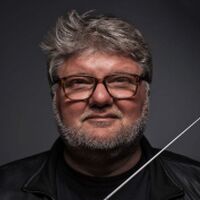
A son of a prominent musicologist, Daniel Raiskin grew up in St. Petersburg. He attended the celebrated conservatory in his native city and continued his studies in Amsterdam and Freiburg. First focusing on viola, he was inspired to take up the baton by an encounter with the distinguished teacher Lev Savich. In addition, he also took classes with Maestri such as Mariss Jansons, Neeme Järvi, Milan Horvat, Woldemar Nelson und Jorma Panula. Raiskin, who cultivates a broad repertoire, often looks beyond the mainstream in his strikingly conceived programs.
From the 2020/2021 season Daniel Raiskin is the Chief Conductor of the Slovak Philharmonic Orchestra in Bratislava. In addition, he is Music Director of the Winnipeg Symphony Orchestra since August 2018 and Principal Guest Conductor of the Belgrade Philharmonic Orchestra from season 2017/18.
The 2021/22 season includes guest conducting appearances with Warsaw Philharmonic Orchestra, Hong Kong Sinfonietta, Stuttgarter Philharmoniker, Tchaikovsky Symphony Orchestra Moscow and Orquesta Clássica Santa Cecilia Madrid.
With the Winnipeg Symphony in May 2022 he will undertake a European tour with appearances at the Concertgebouw in Amsterdam, De Doelen in Rotterdam and Tivoli in Utrecht among others. Raiskin served as Principal Guest Conductor of the Orquesta Sinfónica de Tenerife 2017-18, Chief Conductor of both, the Staatsorchester Rheinische Philharmonie in Koblenz (2005-2016) and of the Artur Rubinstein Philharmonic Orchestra in Lódz (2008-2015). His regular guest appearances include the Athens State, Copenhagen Philharmonic, Düsseldorfer Symphoniker, Iceland Symphony, Japan Century Symphony, Malmö Symfoni Orkester, Mariinsky Orchestra, Moscow Philharmonic, Mozarteumorchester Salzburg, National Symphony Orchestra Taiwan, NDR Radiophilharmonie Hannover, NFM Wrocław Philharmonic, Orchestre National de Belgique, Orchestre National de Lyon, Orquesta Sinfónica Nacional de México, Osaka Philharmonic, Residentie Orkest, San Antonio Symphony, St. Petersburg Philharmonic Symphony, Stavanger Symphony, Swedish Chamber and the Tonkünstler orchestras.
His appearances in opera productions include Carmen, Shostakovich’s The Nose and Mozart’s Don Giovanni among others.
Daniel Raiskin is also relentlessly committed to sharing his knowledge and passion with young musicians around the world. He devotes his time regularly to working with youth orchestras in a.o. Canada, Estonia, Germany, Iceland, Netherlands, Russia and South Africa. Among the major soloists with whom he has appeared are Emanuel Ax, Renée Fleming, Nelson Freire, Martin Fröst, Alban Gerhardt, Vadim Gluzman, Natalia Gutman, Kari Kriikku, Simone Lamsma, Lang Lang, Francois Leleux, Jan Lisiecki, Alexei Lubimov, Tatjana Masurenko, Albrecht Mayer, Daniel Müller-Schott, Olli Mustonen, Steven Osborne, Julian Rachlin, Benjamin Schmid, Julian Steckel, Anna Vinnitskaya and Alexei Volodin. Recent recordings include Mahler Symphony No. 3 and Shostakovich Symphony No. 4 with the label AVI, both to great critical acclaim. His recording with cello concertos by Korngold, Bloch and Goldschmidt with Julian Steckel and the label AVI received an Echo Klassik Award in 2012. Other recent recording projects include a Louis Glass Symphony cycles and a concerto cycle with the entire concertos and rhapsodies by Aram Khachaturian, both with the label CPO, Lutoslawski’s vocal-instrumental works with the label Dux and a recording of Alexander Tansman’s Isaie le Prophète and Psaumes with the label World Premiere Recordings.
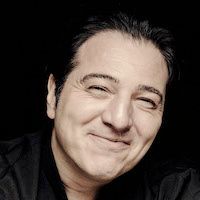
Rudolf Buchbinder is one of the legendary artists of our time. His piano playing is an unparalleled fusion of the authority of a career spanning more than 60 years with spirit and spontaneity. His renditions are celebrated worldwide for their intellectual depth and musical freedom.
Particularly his renditions of Ludwig van Beethoven's works are considered to be exemplary. He has performed the 32 piano sonatas 60 times in cycles all over the world and developed the story of their interpretation over decades. He was the first pianist to play all Beethoven sonatas at the Salzburg Festival during a summer festival. A live recording is available on DVD.
On the occasion of Ludwig van Beethoven's 250th birthday in the 2019/20 concert season, for the first time in its 150-year history, the Vienna Musikverein gave a single pianist, Rudolf Buchbinder, the honor of performing all five piano concertos by Ludwig van Beethoven in a specially edited cycle. Buchbinder's partners in this unprecedented constellation were the Leipzig Gewandhaus Orchestra under Music Director Andris Nelsons, the Vienna Philharmonic Orchestra under Riccardo Muti and the Bavarian Radio Symphony Orchestra, the Munich Philharmonic Orchestra and the Sächsische Staatskapelle Dresden under their chief conductors Mariss Jansons, Valery Gergiev and Christian Thielemann.
Together with the Bavarian Radio Symphony Orchestra and Mariss Jansons, Rudolf Buchbinder also returned to the Elbphilharmonie Hamburg, the Philharmonie de Paris, the Philharmonie Luxembourg and the Carnegie Hall New York as part of a tour.
A première is the focus of the Beethoven Year 2020. Based on Beethoven's Diabelli Variations Op. 120, Rudolf Buchbinder initiated a new cycle of variations on the same waltz by Anton Diabelli, which also forms the basis of Beethoven's epochal masterpiece. With Lera Auerbach, Brett Dean, Toshio Hosokawa, Christian Jost, Brad Lubman, Philippe Manoury, Max Richter, Rodion Shchedrin, Johannes Maria Staud, Tan Dun and Jörg Widmann, it was possible to win eleven leading contemporary composers of different generations and backgrounds. The New Diabelli Variations were commissioned by a variety of concert promoters worldwide and with the support of the Ernst von Siemens Music Foundation.
In March 2020, Deutsche Grammophon released 'The Diabelli Project' presenting the world première recording of the New Diabelli Variations alongside a new recording of Beethoven's Diabelli Variations, which Buchbinder last recorded in 1976. The CD marks the beginning of Rudolf Buchbinder's exclusive partnership with Deutsche Grammophone.
Rudolf Buchbinder is an honorary member of the Vienna Philharmonic, the Society of Friends of Music in Vienna, the Vienna Symphony Orchestra and the Israel Philharmonic Orchestra. He is the first soloist to be awarded the Golden Badge of Honor by the Staatskapelle Dresden.
Buchbinder attaches great importance to source research. His private music collection comprises 39 complete editions of Ludwig van Beethoven's piano sonatas as well as an extensive archive of first prints, original editions and copies of the piano scores of both piano concertos by Johannes Brahms.
He has been the artistic director of the Grafenegg Festival since its foundation in 2007. Today, Grafenegg is one of the most influential orchestral festivals in Europe.
Two books by Rudolf Buchbinder have been published so far, his autobiography 'Da Capo' and 'Mein Beethoven - Leben mit dem Meister'. Numerous award-winning recordings on CD and DVD document his career.
For concert dates and further information please visit the homepage www.buchbinder.net
THE SLOVAK PHILHARMONIC ORCHESTRA was established in 1949. Two highly reputed, internationally acclaimed personalities, Václav Talich (Principal Conductor, 1949 – 1952) and Ľudovít Rajter (1949 – 1976, and the orchestra’s Artistic Director until 1961), stood at the orchestra’s birth. Other chief conductors who have played an instrumental role in the orchestra’s musical evolution include Tibor Frešo, Ladislav Slovák, Libor Pešek, Vladimir Verbitsky, Bystrík Režucha and Aldo Ceccato. Between 1991 and 2001 the role of Chief Conductor and Music Director was held by Ondrej Lenárd. In the 2003/2004 season Jiří Bělohlávek acted as Artistic Director. In 2004 Vladimír Válek became Chief Conductor, and was succeeded by Peter Feranec in 2007 – 2009. From 2009 – 2016 the French conductor Emmanuel Villaume was the orchestra’s Chief Conductor and from 2017 until 2020, the British conductor James Judd. Leoš Svárovský (from 2007 – 2018), Rastislav Štúr (from 2011 – 2019) and Petr Altrichter (for the 2018/2019 season) have been Permanent Guest Conductors of the Slovak Philharmonic. From the 2020/2021 season Daniel Raiskin became Chief Conductor of the Slovak Philharmonic Orchestra.
Among the many guest conductors who have worked with the Slovak Philharmonic over the years, international personalities like János Ferencsik, Witold Rowicki, Václav Smetáček, Karel Ančerl, Franz Konwitschny, Arvīds Jansons, Václav Neumann, Hermann Abendroth, Antonio Pedrotti, Sir Eugene Goossens, Sir Malcom Sargent, Roberto Benzi, Kurt Masur, Sir Charles Mackerras, Carlo Zecchi, Serge Baudo, Claudio Abbado, Kurt Sanderling, Zdeněk Košler (who, thanks to his longstanding fruitful collaboration with the orchestra, was awarded the honorary title of ‘Chief Conductor in memoriam’ in 1996), Riccardo Muti, Karl Richter, Kirill Kondrashin, Leif Segerstam, Alain Lombard, Sergiu Celibidache, Thomas Sanderling, Oskar Danon, Mario Rossi, Neeme Järvi, Ken-Ichiro Kobayashi, Evgeny Svetlanov, Mariss Jansons, Christoph von Dohnányi, Dmitri Kitayenko, Otmar Suitner, James Conlon, Valery Gergiev, Alexander Rahbari, Fabio Luisi, Sir Yehudi Menuhin, Peter Schreier, Vladimir Fedoseyev, Ralf Weikert, Miltiades Caridis, Pinchas Steinberg, Peter Keuschnig, Tomáš Hanus, Jakub Hrůša, Juraj Valčuha, Tomáš Netopil, Ion Marin, Pavel Baleff, George Pehlivanian, Jun Märkl, Ilan Volkov, Wayne Marshall, Eivind Gullberg Jensen, Alan Buribayev must be mentioned, as well as composers and artists of own works like Jean Martinon, Krzysztof Penderecki a Aram Khachaturian.
The orchestra has made numerous recordings for radio, television and the music publishers OPUS, Supraphon, Panton, Hungaroton, JVC Victor, RCA, Pacific Music, Naxos and Marco Polo. The Slovak Philharmonic Orchestra regularly gives guest performances on leading European stages and at festivals. In the course of its numerous tours abroad, the Slovak Philharmonic has performed in nearly every European country, as well as in Cyprus, Turkey, Japan, South Korea, the USA and Oman.
One of the most important events of the 2019/2020 season, which had to be ended prematurely due to the coronavirus pandemic, was a trio of concerts by the SPh at the Bratislava Music Festival with the conductors James Judd, Juraj Valčuha and Pinchas Steinberg, a special concert to commemorate the Milan Rastislav Štefánik Year, gala concerts to celebrate the 70th anniversary of the Slovak Philharmonic, and the 30th Anniversary Concert of the Velvet Revolution.
The planned SPh concert tour to South Korea and Japan, which should have taken place this season, has been moved to 2023 as a result of the overall situation in the world.